In Conversation with Channatip Chanvipava

For the Urban Dwellers exhibition curated by LVH Art, we sat down with Channatip Chanvipava, a London-based artist whose layered paintings draw from personal memory and architectural forms, to discuss his process and how his work engages with the theme of the exhibition.
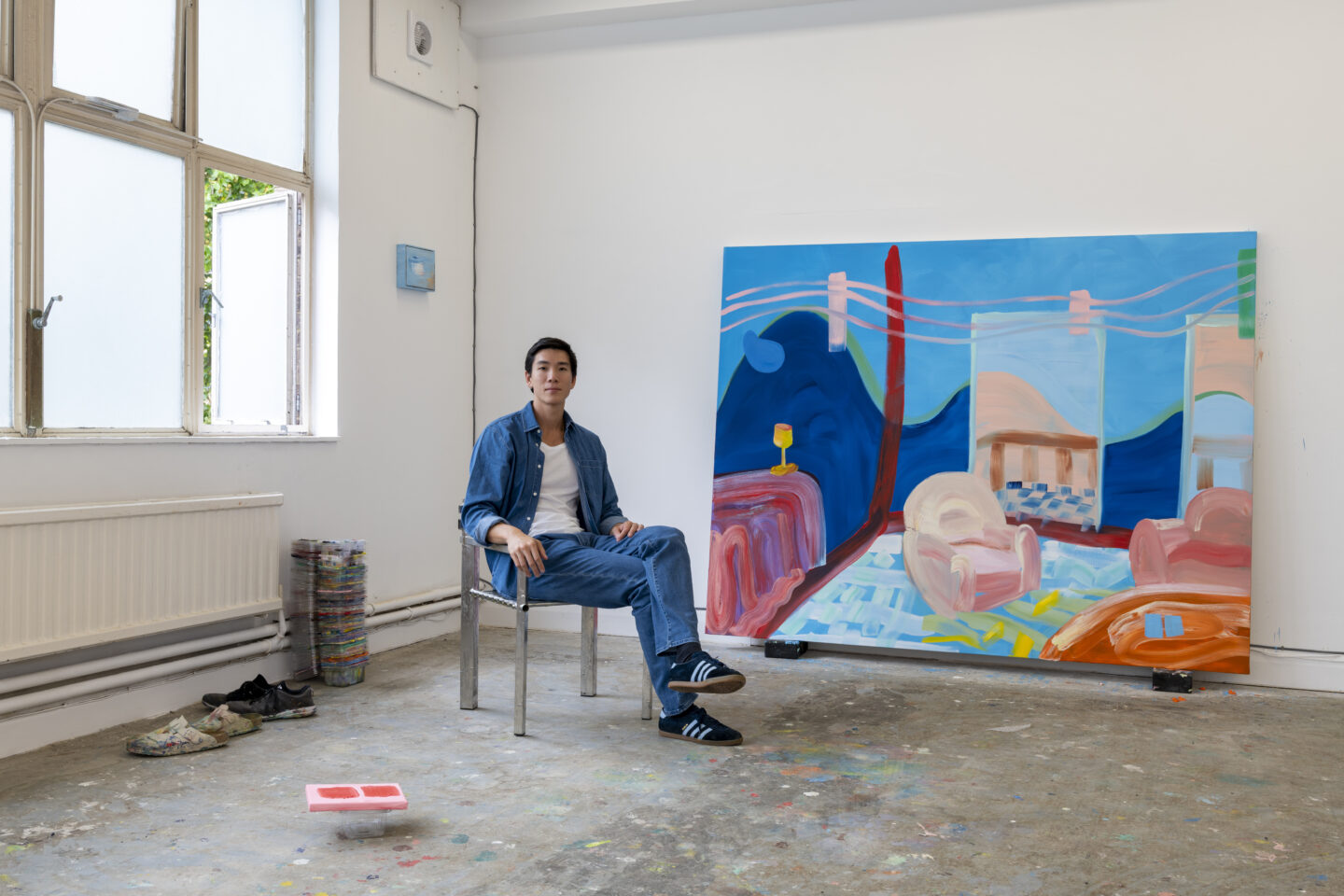
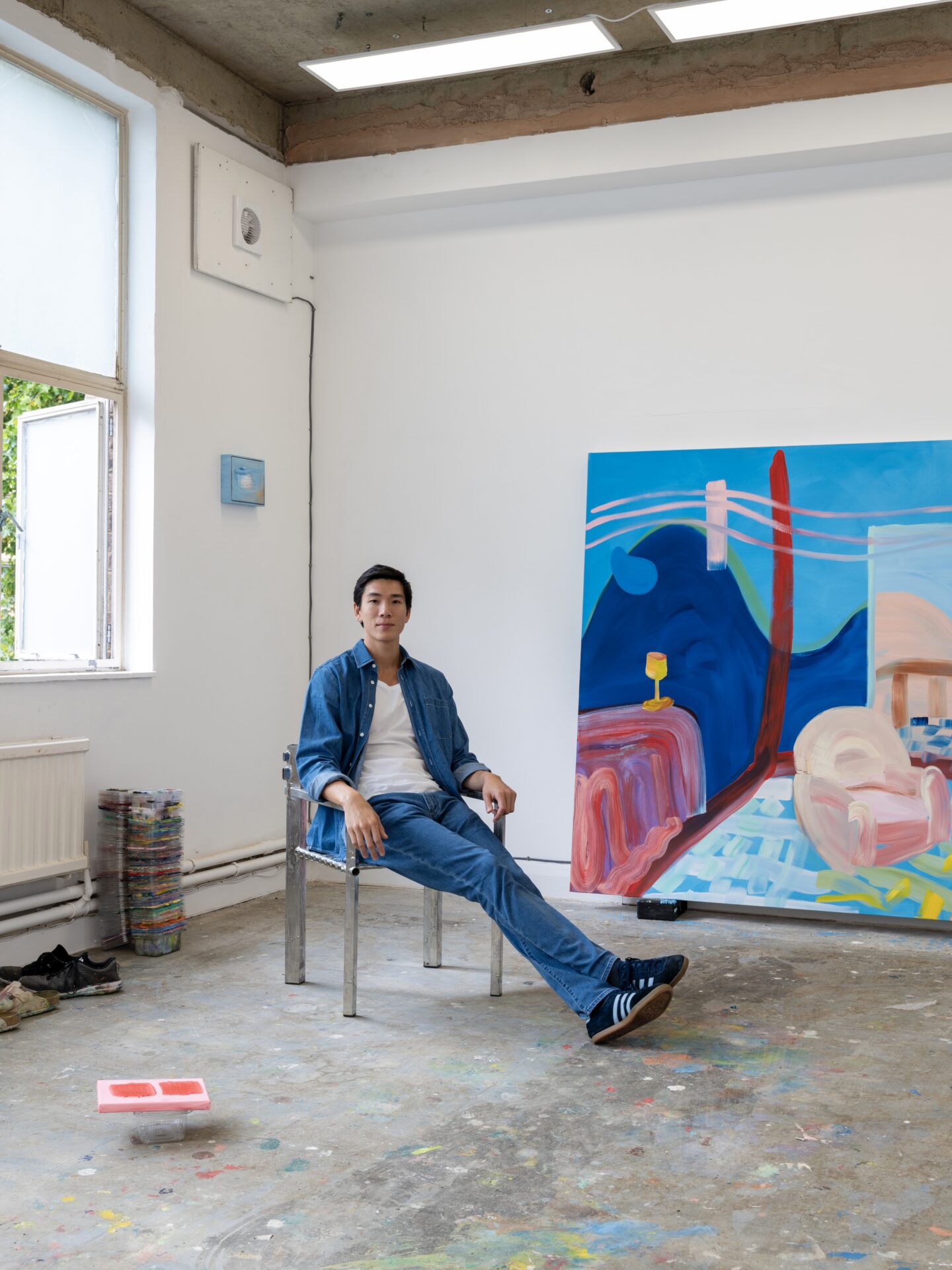
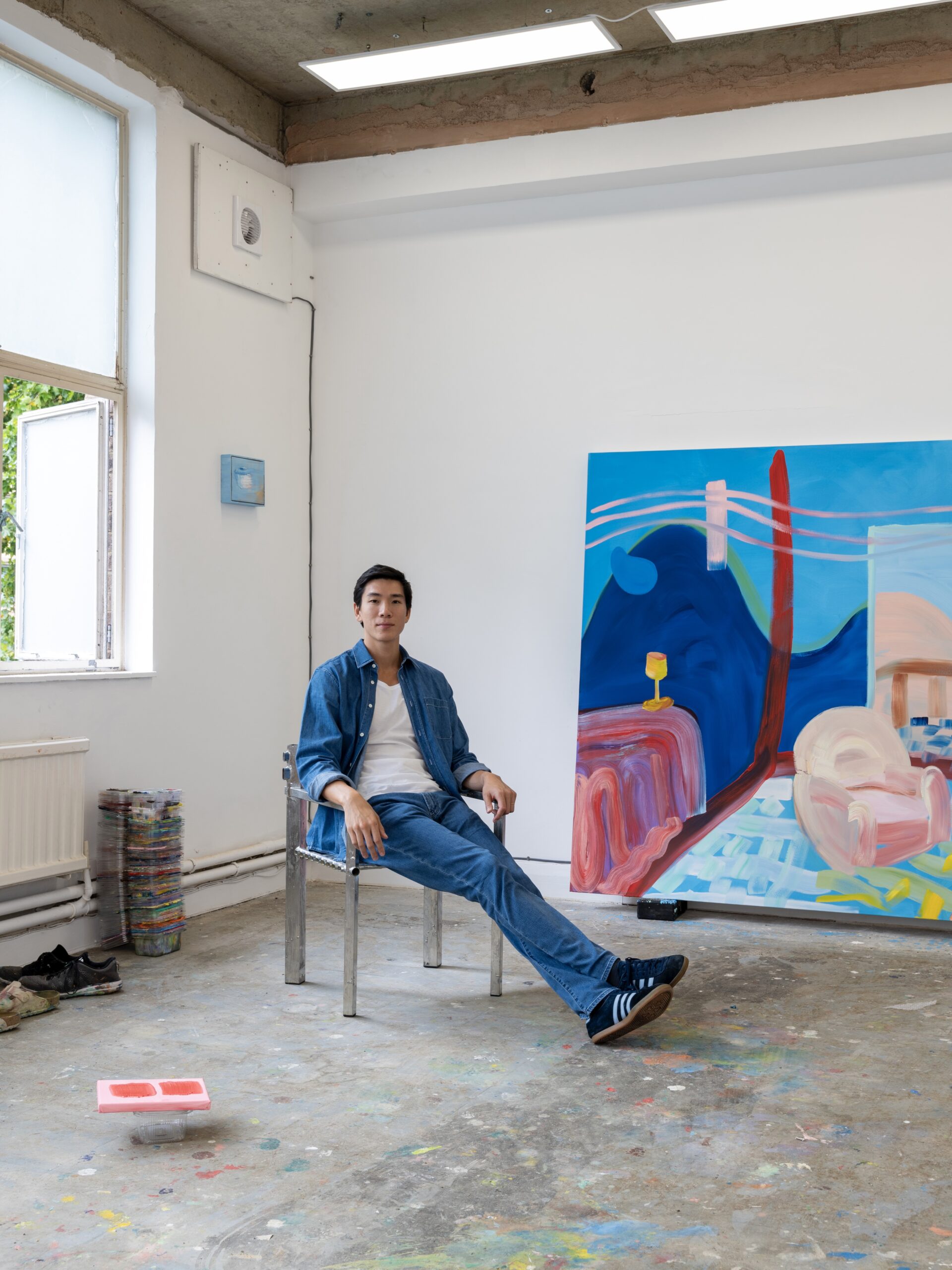
Channatip Chanvipava (b. 1993) is a London-based artist whose work seamlessly blends abstract and figurative elements, capturing intimate personal moments alongside universally relatable experiences. By avoiding sketches and physical references, he leans into spontaneity and intuition to capture the immediacy of memories as they arise. Characterised by thick, expressive brushstrokes, his work celebrates the materiality of paint, drawing on its sculptural texture and the dynamic energy of fluid, visible marks. Familiar objects such as chairs and sofas often appear as symbols, offering viewers visual prompts that invite reflection and a renewed appreciation for everyday mundane moments of life.
LVH Art: You work intuitively, without sketches or references, relying on memory. Why is painting from memory such an important part of your practice?
Channatip Chanvipava: I use paint and memory to express what I can’t always put into words. I am a narrative painter, creating works rooted in memory — drawn from my experiences, observations, and personal stories. By painting directly rather than transferring sketches first, I allow myself to be impulsive. I don’t like diluting the expression of memory. When I paint from a physical reference, sketch beforehand, or test colours in advance, the memories and expression can lose their sincerity. I believe in letting impulse guide how I paint; my goal is to have my memories expressed as sincerely as possible.
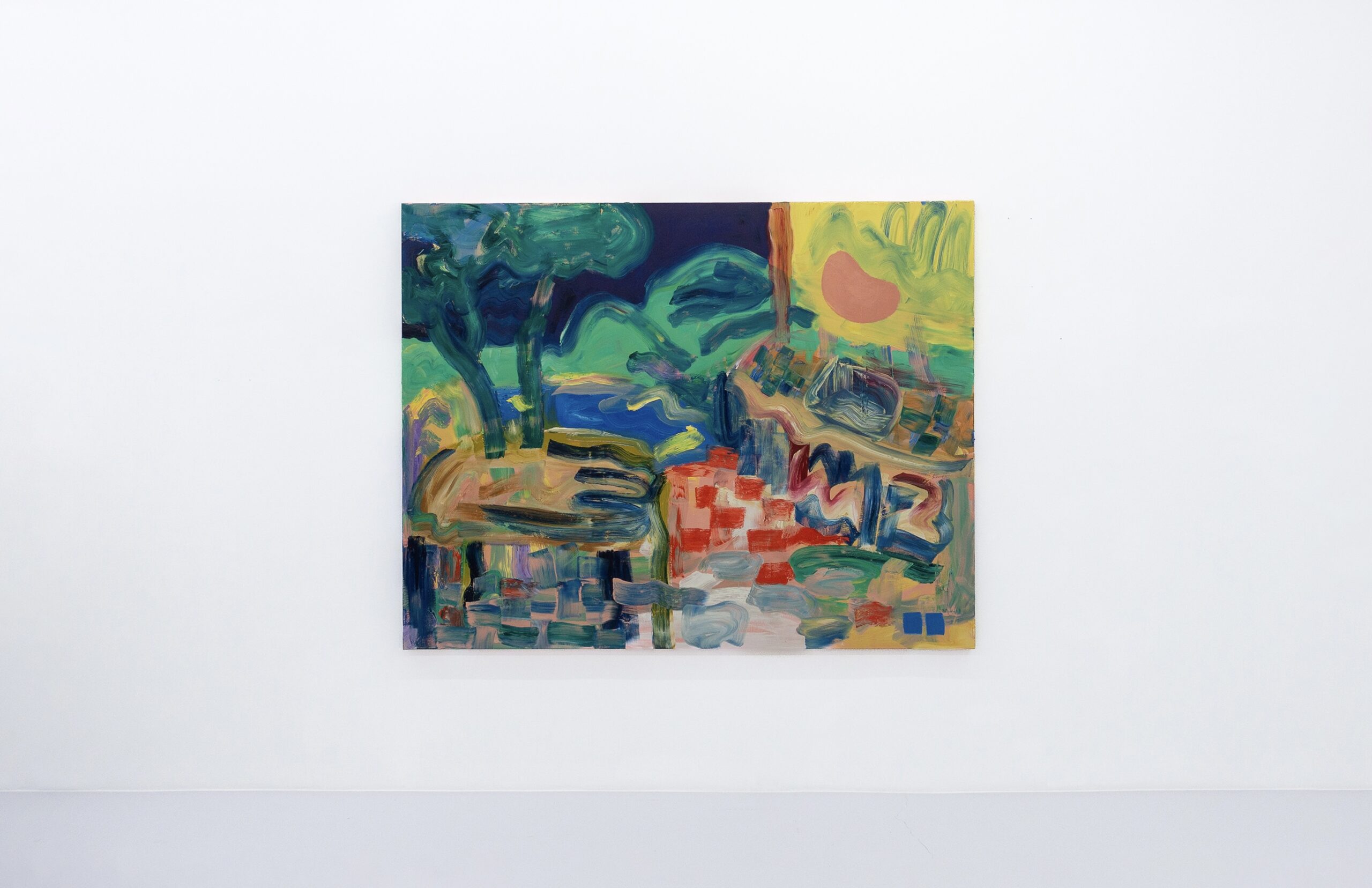
LVH Art: Your paintings appear vibrant and freshly applied, with visible brushstrokes that don’t conceal the medium of paint. What draws you to this technique of using such thick, expressive applications, and does this approach affect the drying time of your works?
Channatip Chanvipava: I’m really drawn to the qualities of paint, so I don’t want to hide that. I want it to be true to its form. It’s sculptural, it’s deep, it has texture. It’s illuminative, it’s deep, it’s saturated. I want to see this on my surfaces. I want the paint on my canvas to looks so delicious that you can eat it and want to touch it. My works take an extremely long time to dry. I am self-taught, so I do not think of having or being fixed to a certain technique, but I think of this concept of time, time stepping away from the canvas and using that as a variable and as a tool. If I want the strokes and colours to be more visible, separate, and imposed, that means I need more time, and a wet brush on a dry surface. Whereas with wet-on-wet, I want the colours to merge, to blend, to create a gradient. I grew up surrounded with traditional Chinese ink paintings and I was always so curious about its fluid yet bold strokes. I wanted to also capture the same velocity and movement of the brush. I want to make visible this energy of emotional charge.
LVH Art: Colour plays a central role in your work, do you approach it more instinctively, or do you deliberately build palettes to evoke certain moods or themes?
Channatip Chanvipava: Colour is constantly evolving for me, it has changing values and emotions. Each memory depicts the same colour differently and each painting contains the same colour where the meaning has shifted. Colour can function in many ways, just as a word changes meaning within a sentence. I use colour to push the direction of the subject and expression within a narrative, and I think of it as shaping form rather than merely filling it.
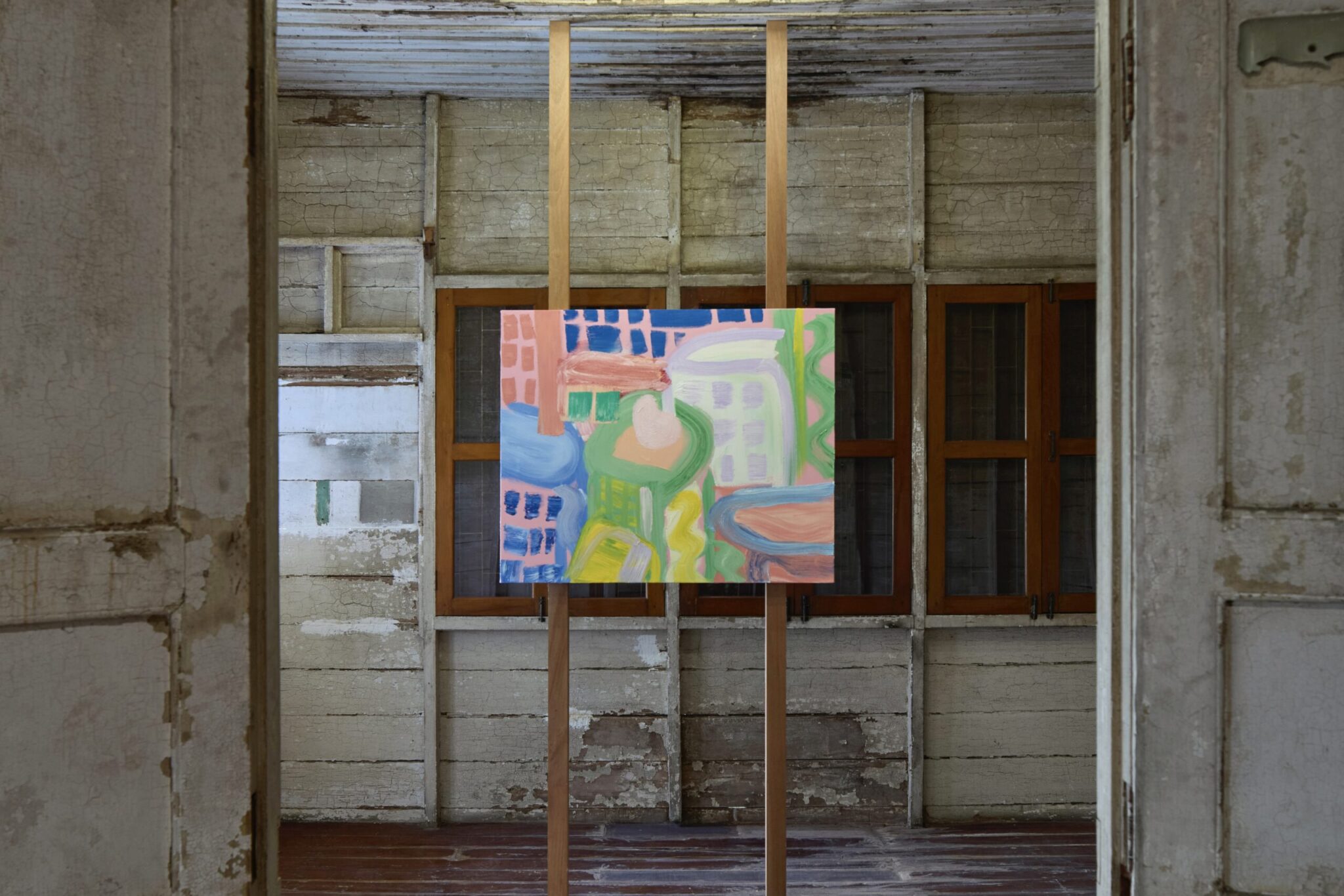
LVH Art: Your work seems to shift between abstract and figurative. What attracts you to that space, and what helps you find your balance in a painting?
Channatip Chanvipava: I don’t consciously think about balancing abstraction and figuration. I stay true to my practice and let the process guide the outcome of the painting. As I mentioned, memory has so many abstract components. How do you remember love? How do you remember sadness? How does that translate into paint? There’s also the question of containment—how do you hold onto memory? Memory is both contained and uncontained, and over time, it becomes difficult to define it sharply in the mind. I think that tension between abstraction and figuration emerges naturally from the nature of memory itself, rather than from anything I control.
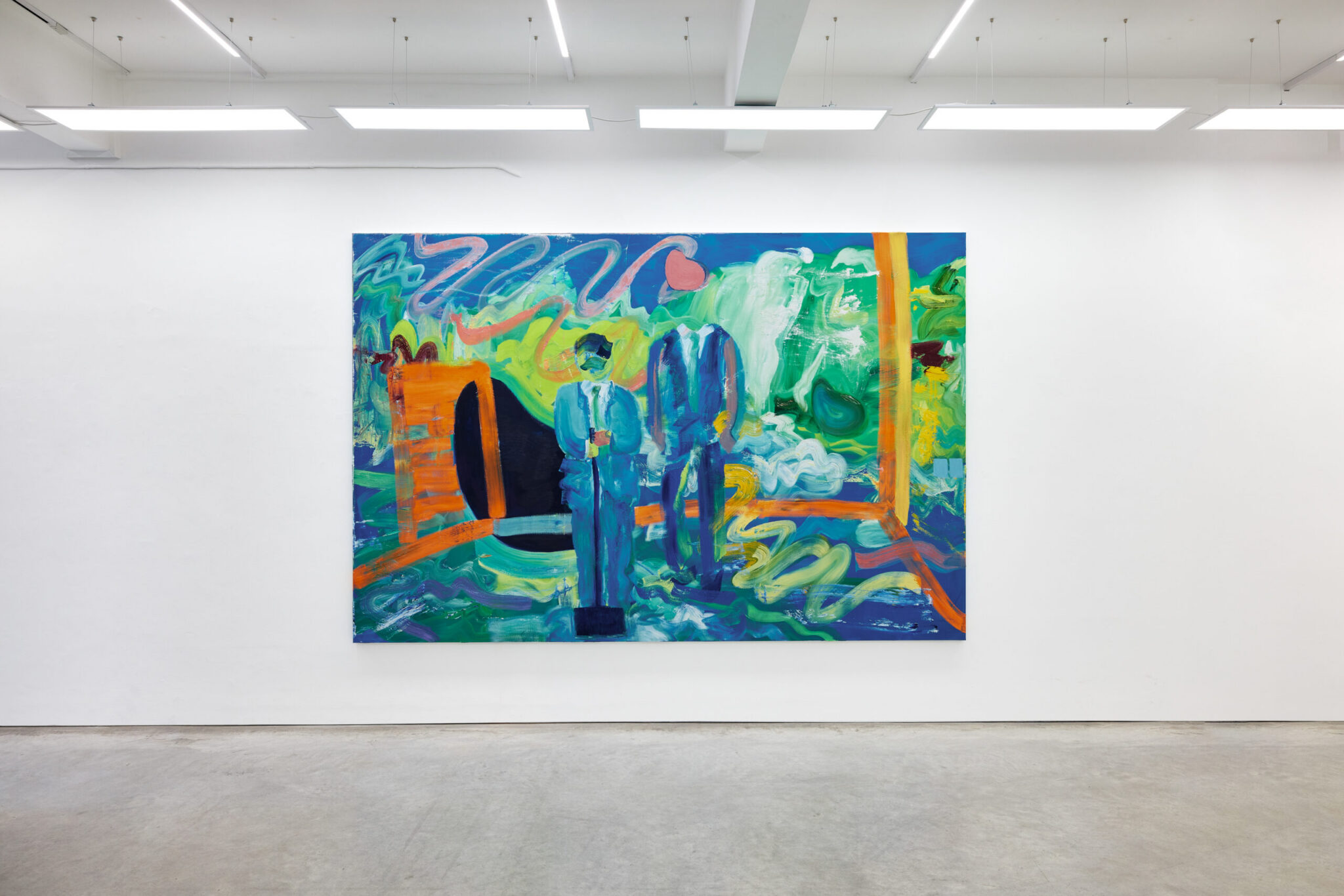
LVH Art: Often you use familiar objects, like chairs and sofas. What draws you to include these in your work?
Channatip Chanvipava: Familiar objects are all around us every day, so I can’t really escape them. They act as hints or clues for the viewer, inviting them to respond and create their own narrative or reflection. These simple objects are metaphorical, symbolic, and full of meaning, but at the same time, they are reminders to notice and appreciate the simple moments in life and to find beauty wherever we can.
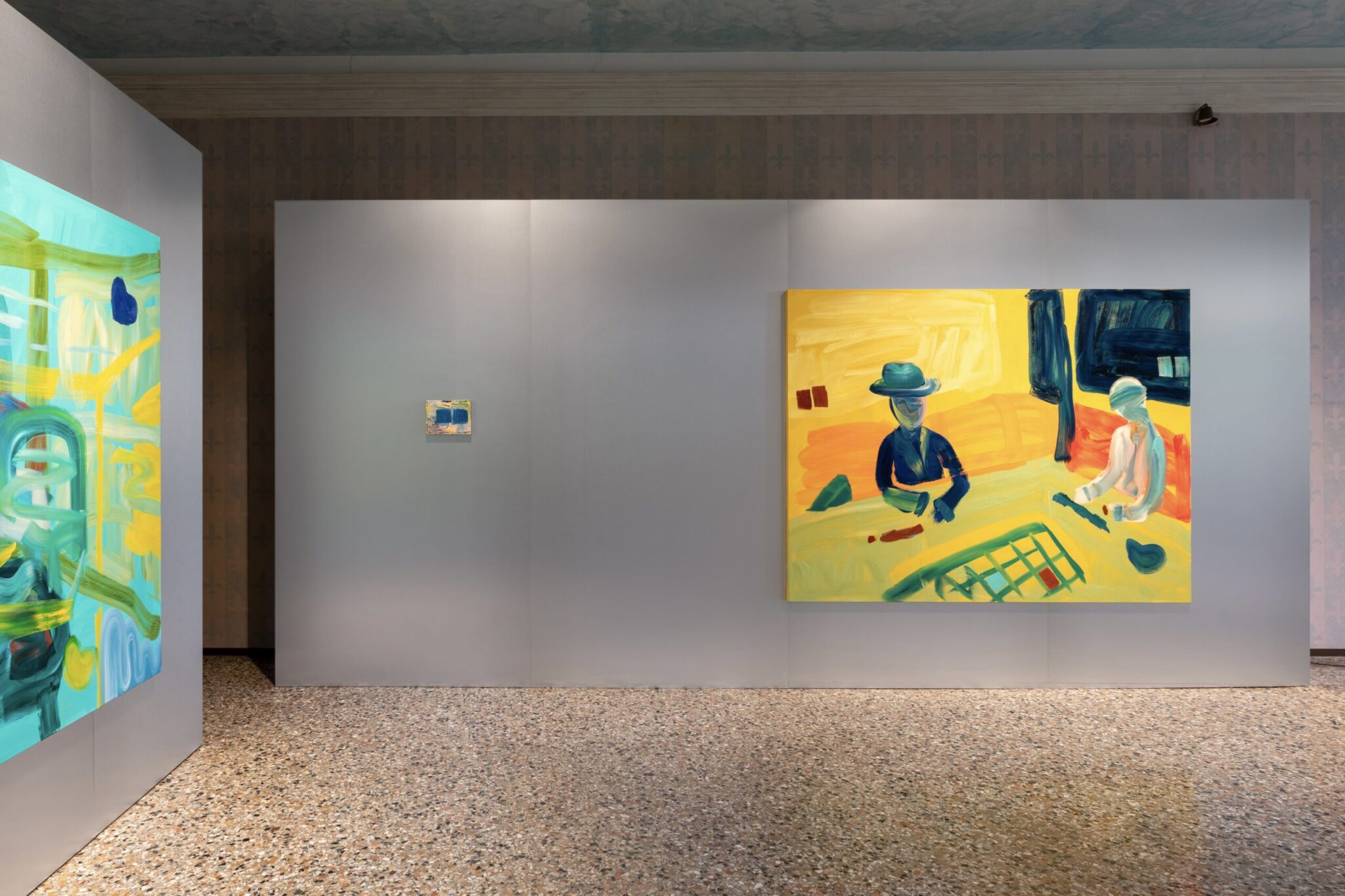
LVH Art: Is there a moment in that process when you feel your painting is complete or that it has reached a point where you are satisfied?
Channatip Chanvipava: I am not always sure I am happy with it, but there is a point of inflection, and I am getting much better at recognizing it.
LVH Art: Are there any artists, writers, or creatives who have influenced you or your practice, and if so, what makes you resonate with them?
Channatip Chanvipava: Yes, there are many, but the two most meaningful to me are Marcel Duchamp and Claude Monet. I would start with Duchamp. His idea of using found objects and repositioning and repurposing them is like how I work with memory. I think of memory as something found, which I then repurpose with new meaning and narrative in my work. The second is Claude Monet. I grew up imitating his paintings from a very young age, and the way I convey light and atmosphere in my work is still deeply influenced by him.
LVH Art: We would love to know more about your painting State of Mind, which will be part of Urban Dwellers. What was the inspiration behind the work? How long did it take you to complete it?
Channatip Chanvipava: I was thrilled to learn of Urban Dwellers, because State of Mind is part of a series where I explored how we connect to spaces and our relationships with them. Why are we so attached to certain environments? How do we recollect them? How are they stored in memory, and why is it so important to be able to remember and revisit these places without physically being there? State of Mind, as the title suggests, points directly to this exploration. However, I prefer not to give too much away, beyond the title and the forms that appear on the surface.
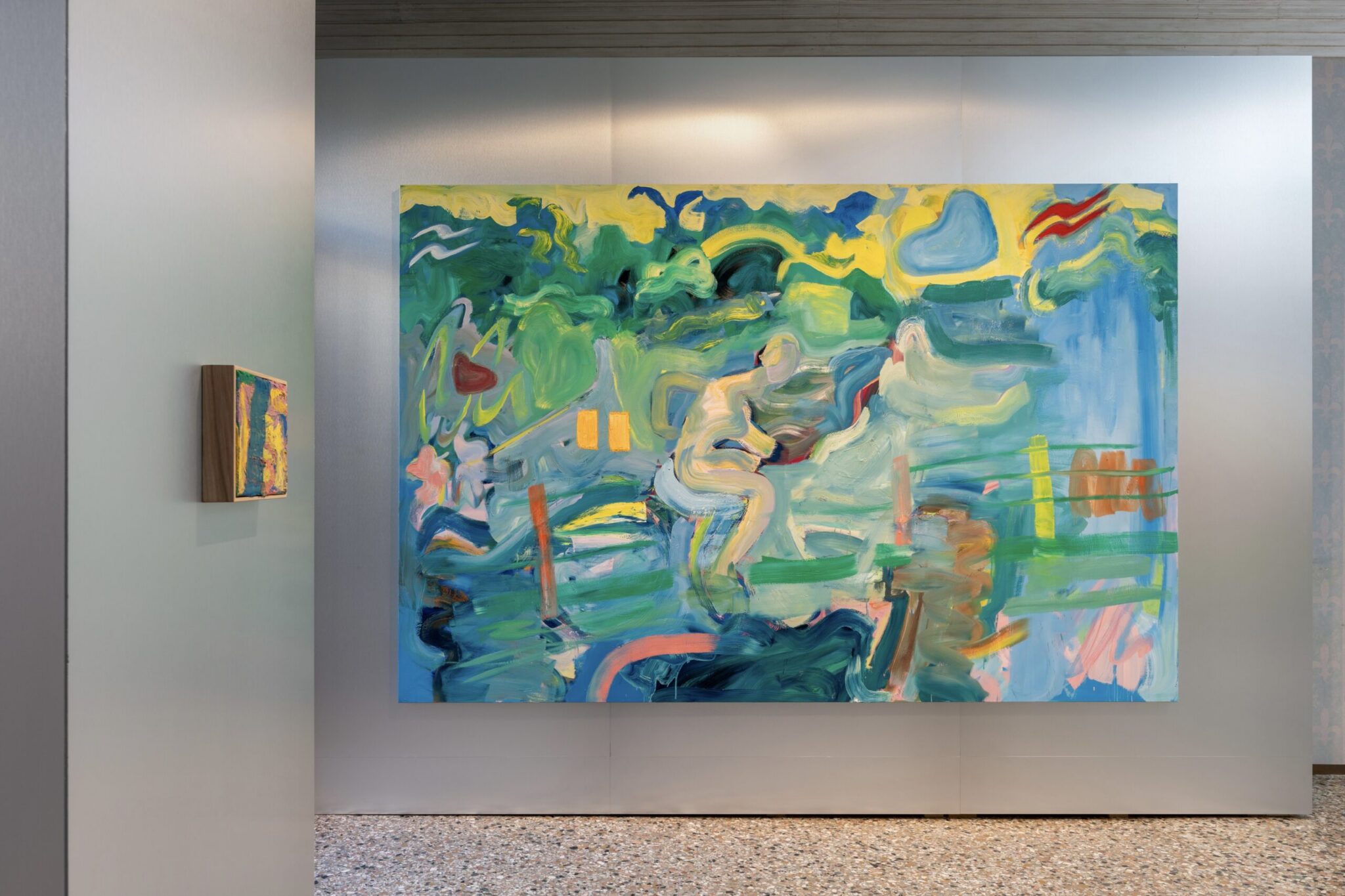
LVH Art: Are there any recurring symbols that appear often in your work?
Channatip Chanvipava: Yes, we spoke about objects as being symbols. But there are also other symbols that appeared in my first paintings, and they keep on reappearing. They haunt me everywhere I go and paint, but they’re representative of a spiritual belief and a reminder inside me. So it grounds the memory, it grounds the meaning, it grounds the painting, and most importantly, it grounds me.

Mexico City Now: Artists, Galleries, and the Pulse of a Global Art Capital
Mexico City Now: Artists, Galleries, and the Pulse of a Global Art Capital
From Tradition to Form: Mexico’s Design Landscape Today