In Conversation with Filippo Antonello

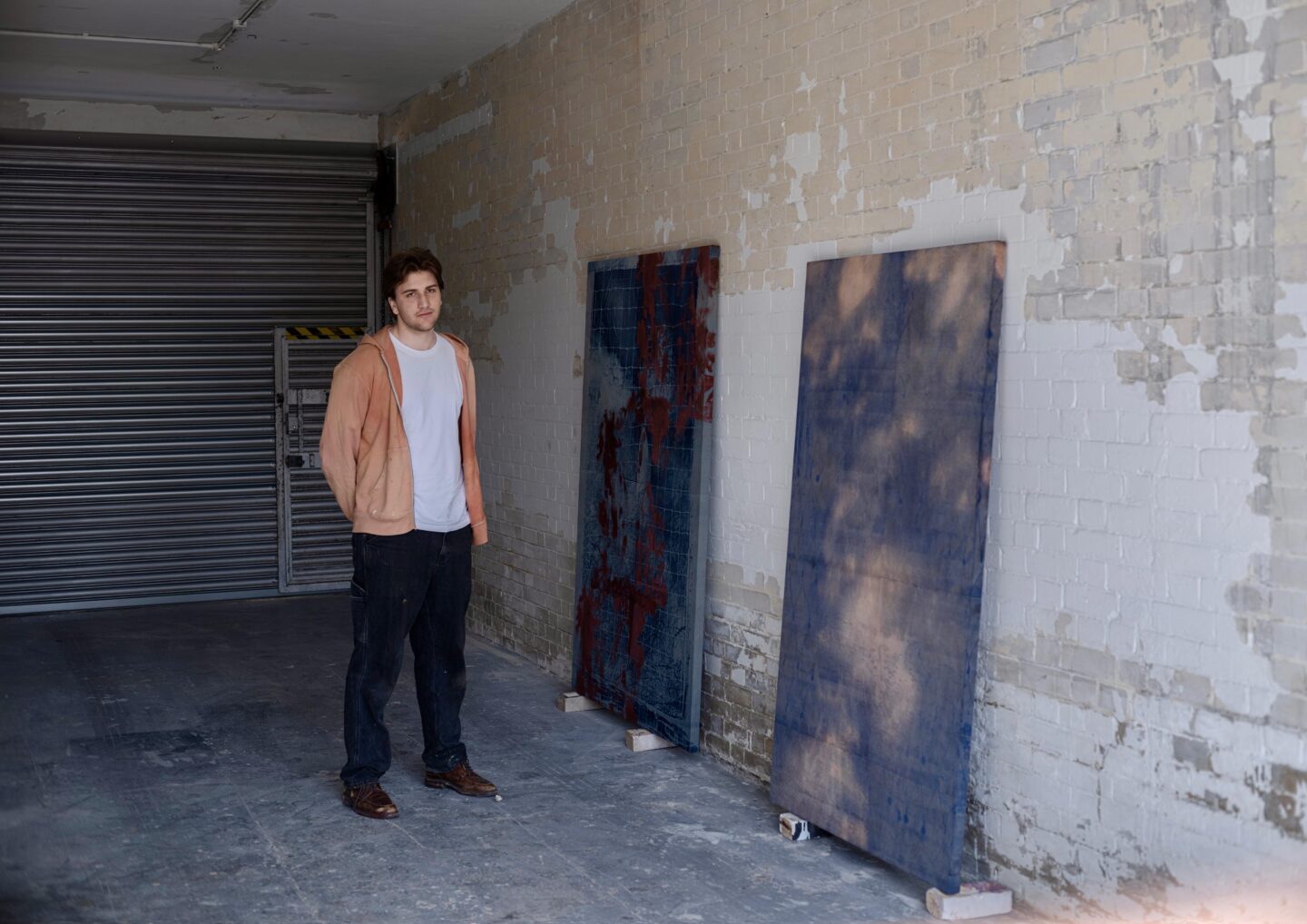
For the Urban Dwellers exhibition curated by LVH Art, we sat down with Filippo Antonello, a London-based artist whose experimental practice combines textiles, bleach, ink, and found materials, to discuss his process and how his work resonates with the theme of the exhibition.
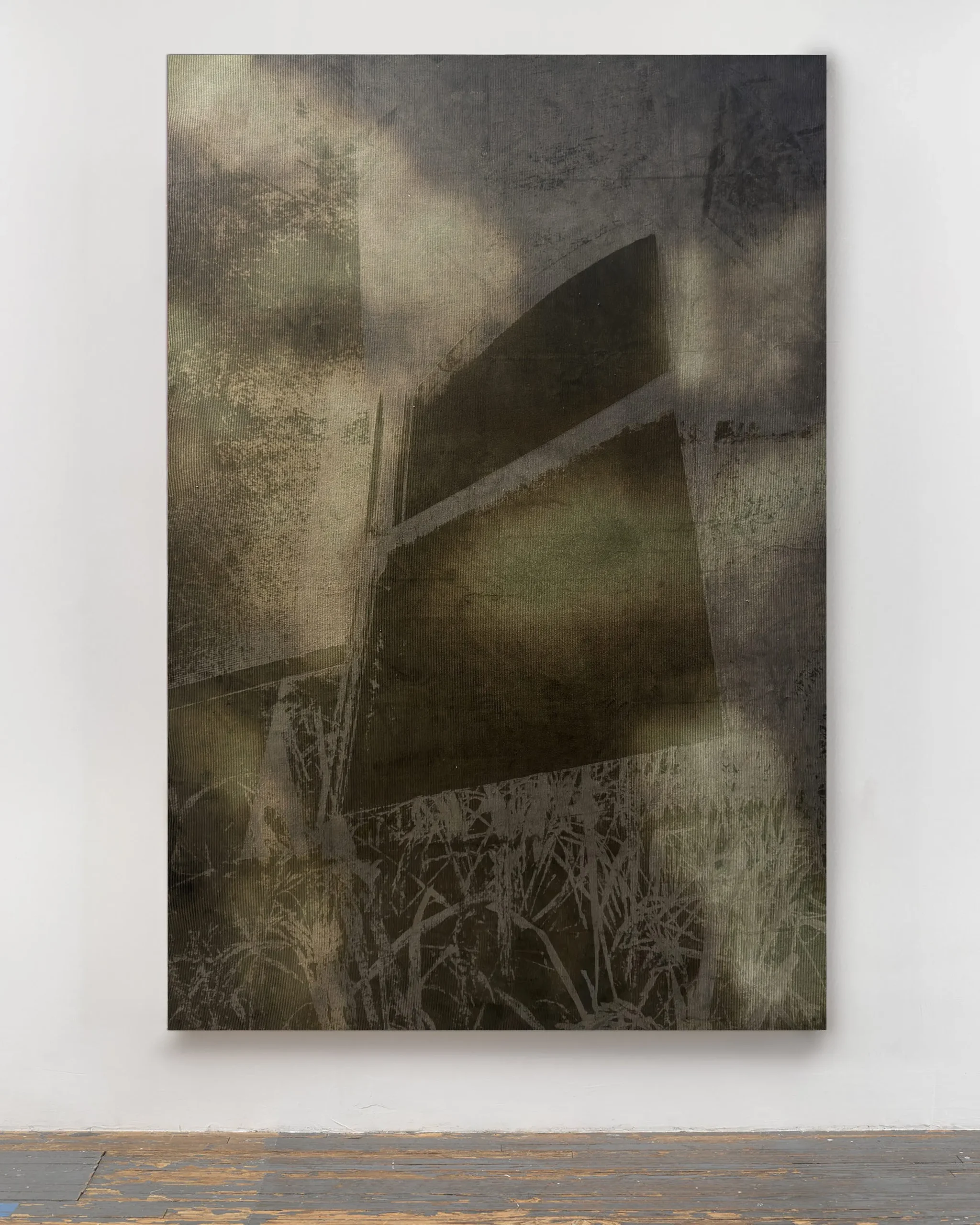
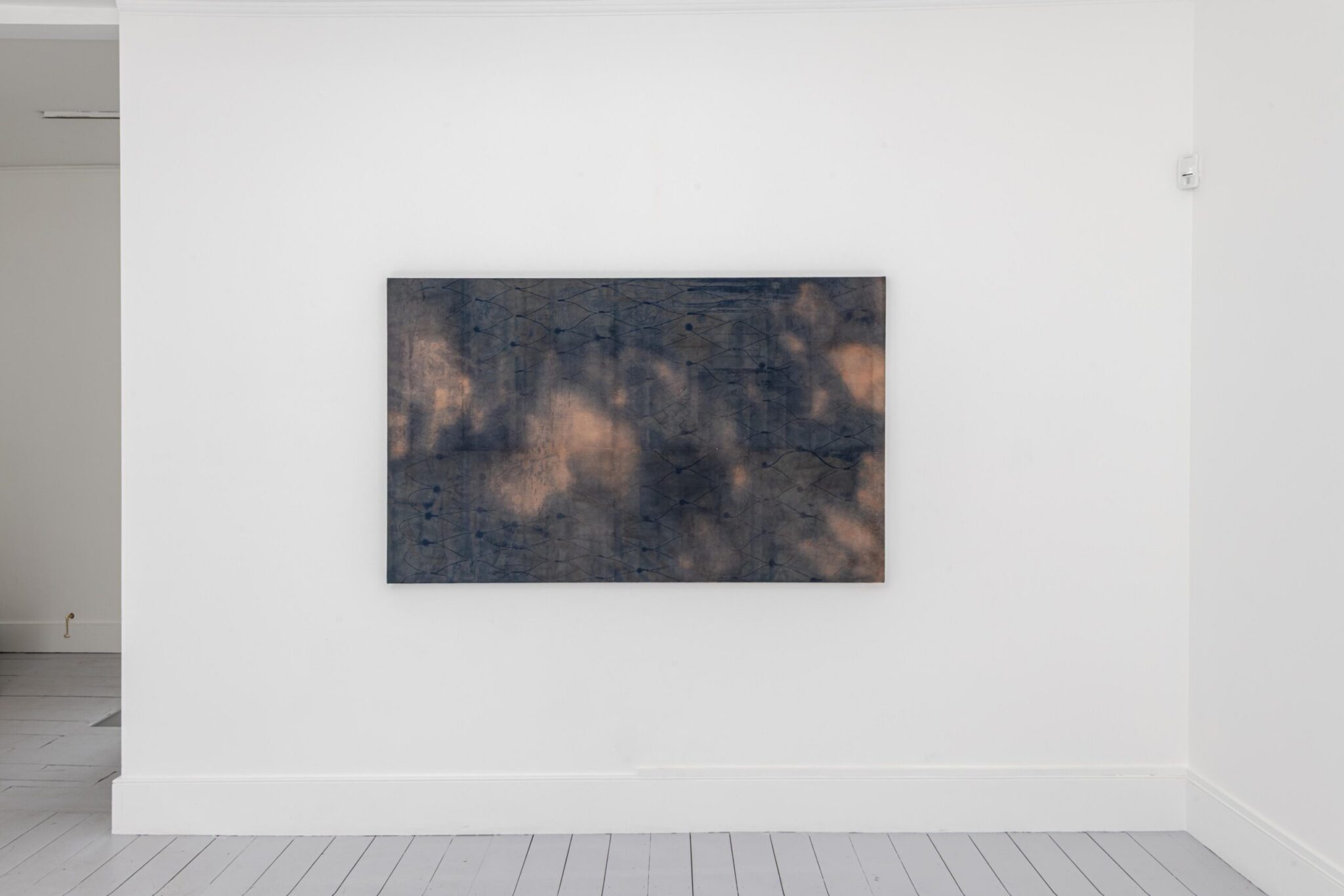
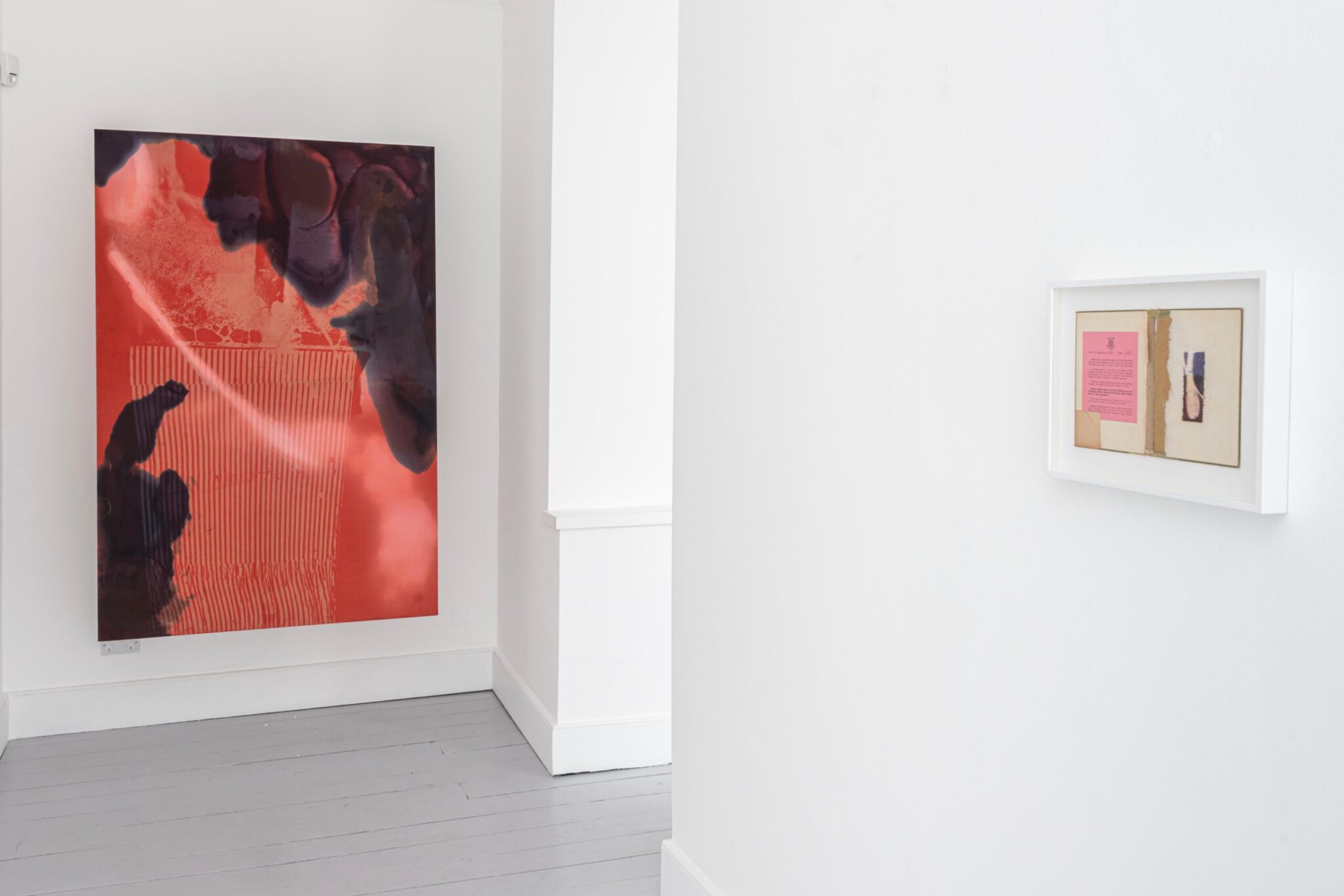
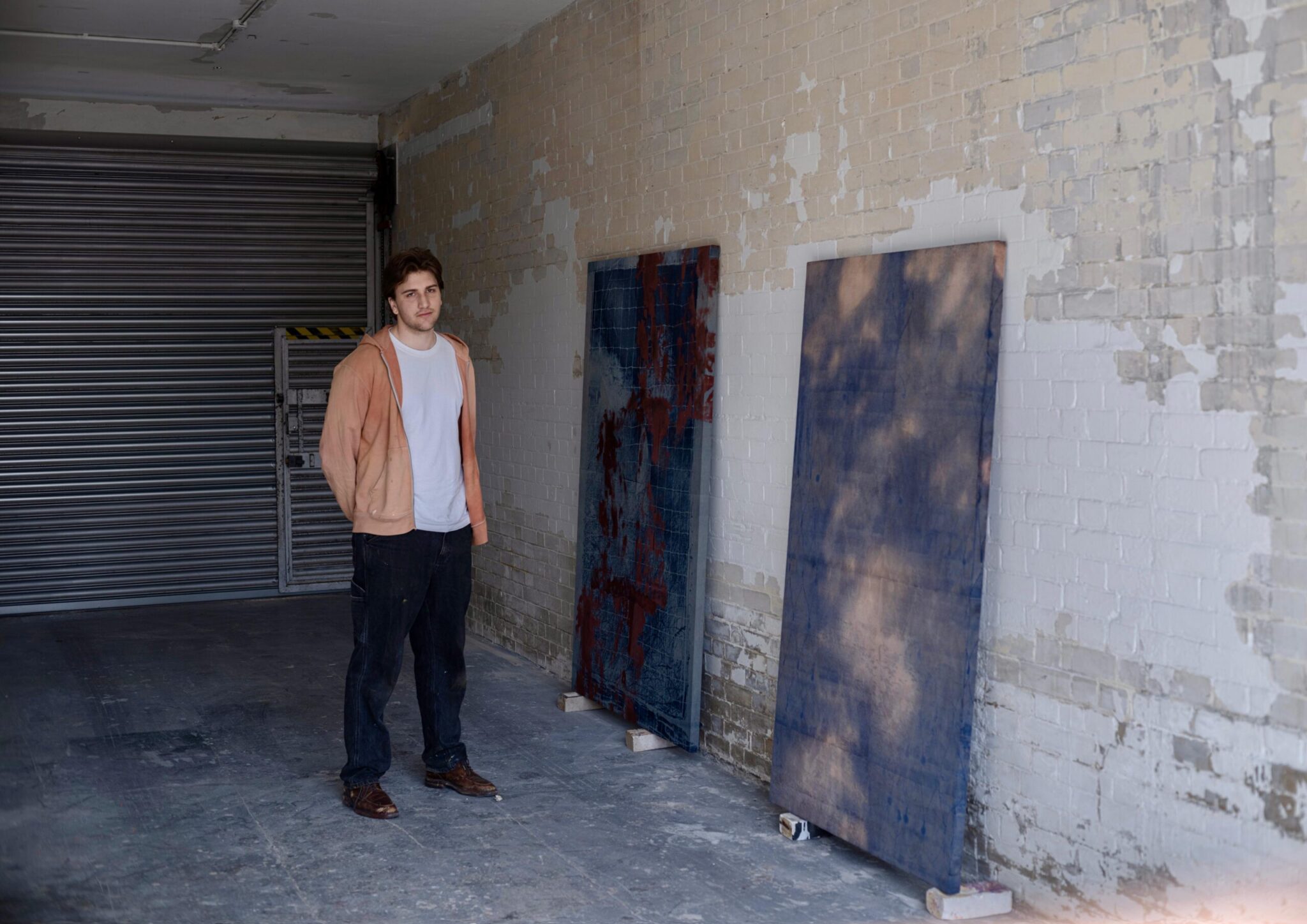
Filippo Antonello (b. 2002) is a Swiss-Italian multidisciplinary artist based in London. His practice explores the boundaries between memory and loss, presence and absence. Combining conceptual thinking with an intuitive material sensibility, he treats painting as a site of continual transformation, where images surface and recede, creating a state of flux in his works. Working with bleach and ink on fabrics such as velvet, denim, and corduroy, Antonello reimagines familiar textiles as unstable, reactive grounds. His process involves both addition and subtraction, as he layers, and strips back continuously. At times Antonello lets chemical reactions guide the image’s evolution, embracing elements of chance, imperfection and unpredictability, evoking the nature of analogue photography. For Antonello, destruction is not an end but a mode of revelation, as through the breakdown of surface, traces of light and form emerge. Antonello’s works reveal a delicate balance between fragility and permanence, with absence resonating as strongly as presence.
LVH Art: Can you walk us through your creative process? Do you usually begin with a clear vision, or is it more intuitive, with the work evolving as you go?
Filippo Antonello: It really depends on the medium I’m working with. Some mediums require more preparation and planning, where I start with a clearer vision, while others give me more space to be intuitive. I usually begin by mapping out a precise structure for the composition and its forms. Once that framework is set, the ink pouring’s and colour become more instinctive and playful. Over time, I’ve come to see research itself as a form of practice—not about finding definitive answers, but about opening possibilities and creating space for reflection. My work has always been fluid, never strictly linear or confined to one approach, and with this new body of work the lines between mediums have started to blur quite naturally. The process often feels circumstantial, almost like coexisting with the pieces: I move back and forth between them, sometimes setting one aside for months before returning to it.
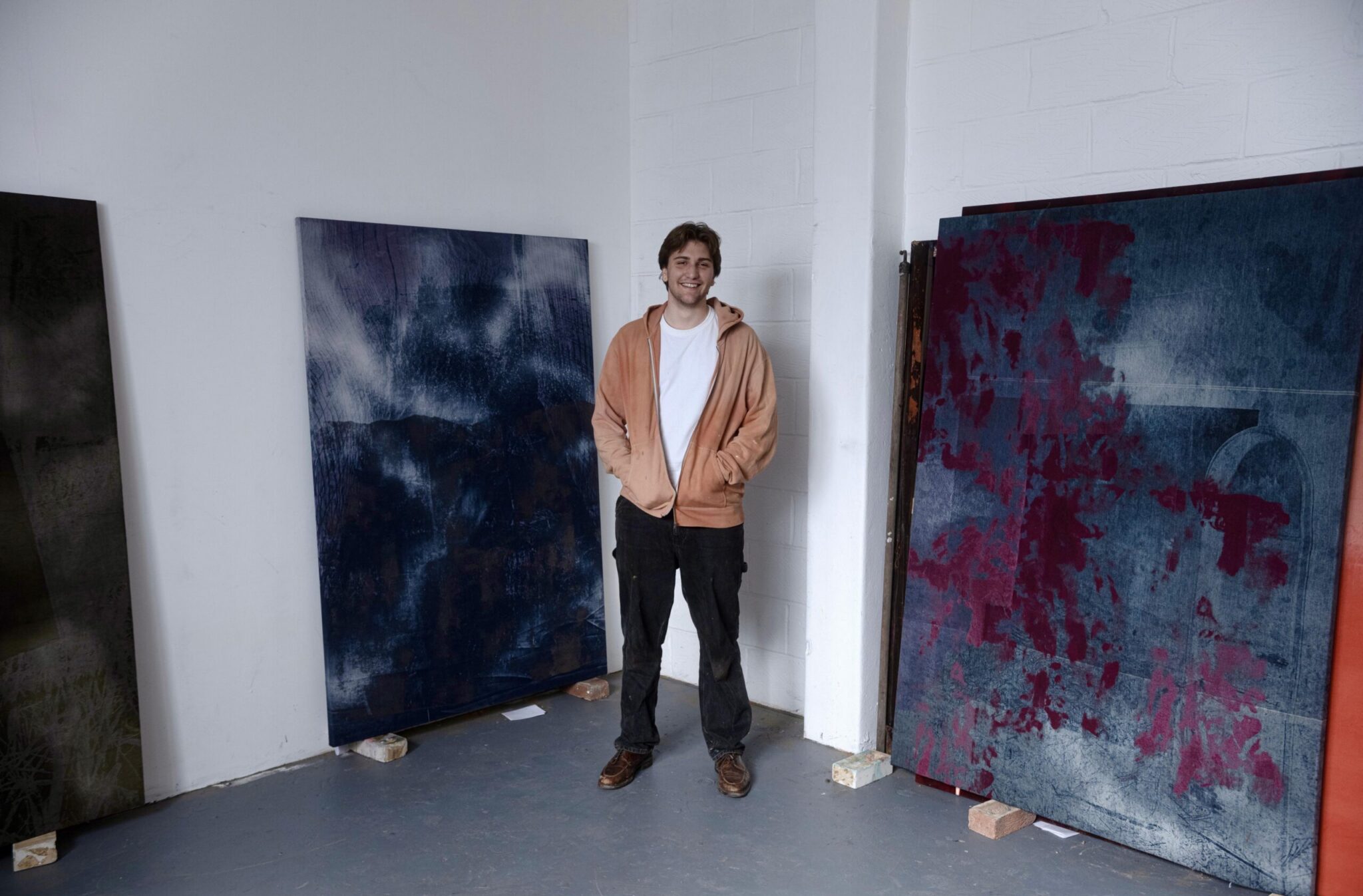
LVH Art: You frequently work with textiles like velvet, denim, and corduroy, treating them as unstable grounds. What attracts you to these fabrics, and how do they shape the energy of your paintings?
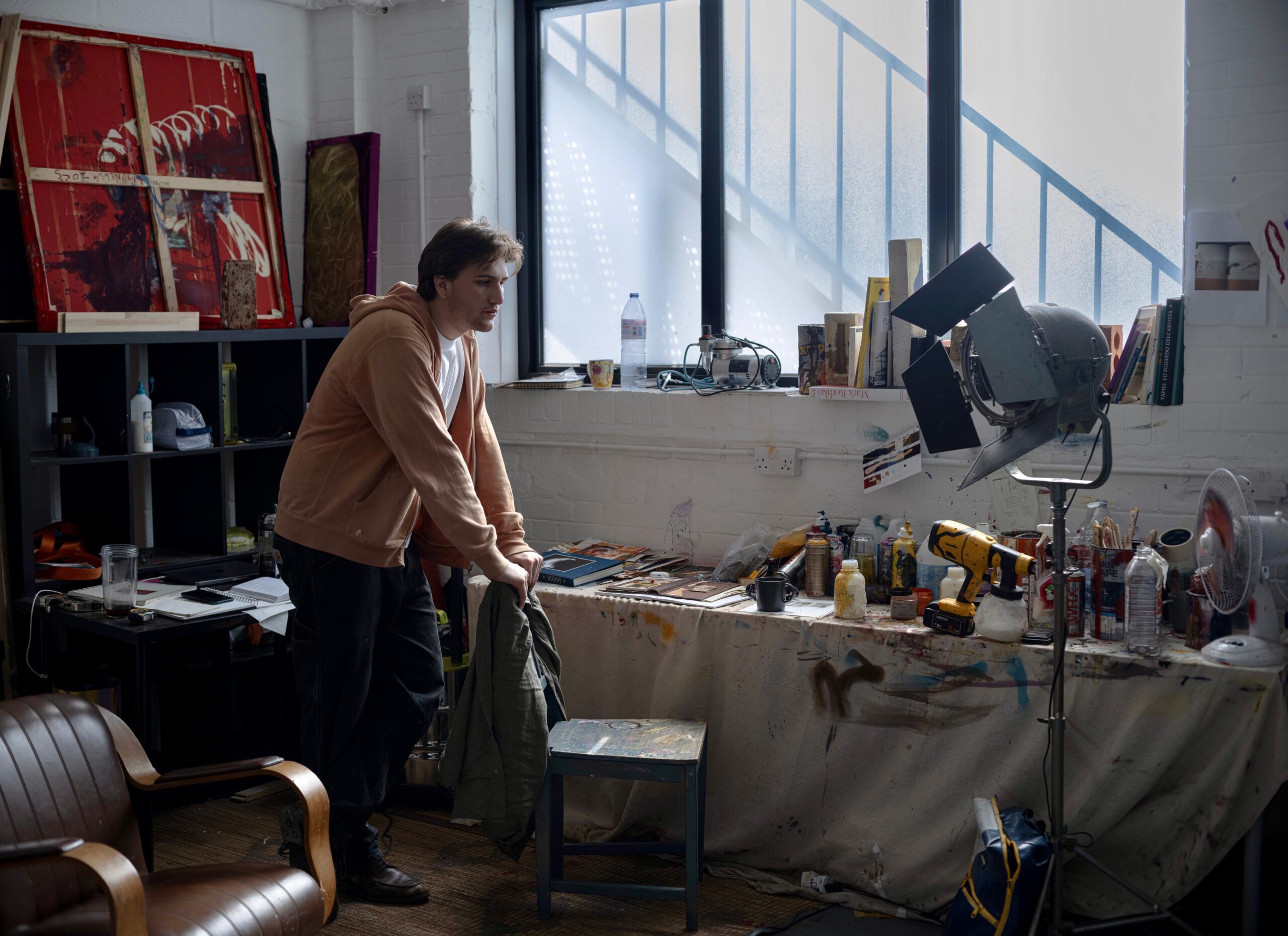
Filippo Antonello: For me, the process begins by letting the hands think first. I might experiment with combining resin and paint, working with velvet or metal in unexpected ways, or piecing together collages from found objects. These experiments are worked out through the body rather than just in the mind. The brain often convinces you that you’ve already solved something, but it’s only when you engage with the material directly that you notice what’s missing, like revisiting a math problem you thought you knew back in school. What really interests me is the way materials create their own rhythms, sometimes slipping out of control and other times holding back.
LVH Art: In the studio, how do you know when a work has reached its point of completion, especially when you’re working with shifting forms and unpredictable materials?
Filippo Antonello: Eventually a work reaches a state that feels almost like perceiving white noise. At that point, the abundance or scarcity within the composition creates an intangible visual hum. I think of it as a hum not in the sense of a sound, but as a presence with a kind of direction that shapes how I see and think about the work. It’s difficult to describe precisely, but it’s a sensation I recognize – almost like a distant bell ringing, telling me the work has reached the place it needs to be.
LVH Art: Colour plays a central role in your work, do you approach it more instinctively, or do you deliberately build palettes to evoke certain moods or themes?
Filippo Antonello: Colour plays a central role in my work because it’s impossible to ignore, but my relationship with it is very instinctive. I usually mix colours on the spot and approach them in a very natural, immediate way. Colour becomes essential in my structures and compositions because it carries a certain energy, almost like a frequency or a rhythm. For me, it’s about aligning the rhythm of the colour with the rhythm of the structure or the image, and that interplay is something I enjoy exploring again and again.
LVH Art: Are there any artists, writers, or creatives who have influenced you or your practice, and if so, what makes you resonate with them?
Filippo Antonello: I would say poetry has had a strong influence on my practice. As a child, reading poetry gave me an awareness of rhythm, arrangement, and simplicity, and how these elements can create impact through precision and clarity. That way of thinking stayed with me as I moved from writing into photography, painting, and ceramics. I became very attuned to the idea of being deliberate in composition, of balancing sensitivity with structure. Words carry their own rhythms and physical weight, almost like materials such as metal or wood, and I’ve always been interested in syntax not just as writing but as a kind of arrangement.
LVH Art: What was it about the theme of Urban Dwellers that first attracted you, and how do you feel your work connects to it?
Filippo Antonello: What drew me to the theme was the opportunity to think about urbanity not just as a subject to be described, but as a rhythm or a structure to be explored. I wasn’t so interested in defining what urban life means to me, but more in questioning it and translating its energy into a visual language. For me, the urban has a certain pulse and geometry, and I wanted to capture that sense of order and collapse that cities often embody.
LVH Art: Can you tell us about the painting you created for Urban Dwellers, what inspired it, what connected you to it, and how you feel it resonates with the theme of the exhibition?
Filippo Antonello: For this exhibition I created a painting that focuses on the rhythmic and geometrical aspects of how I perceive urbanity. In the lower part of the composition, the repeating shapes almost feel like a beat, something I associate with the pulse of the city. Above, the structures rise and then collapse, which to me also feels very urban, reflecting both construction and fragility. Unlike much of my practice, which often has a fluid relationship with materials and more organic structures, this piece emerged more rigid and restrained, almost metallic in quality. That stiffness gave the work a precise character that, for me, resonates strongly with the idea of interpreting an urban setting.
Mexico City Now: Artists, Galleries, and the Pulse of a Global Art Capital
Mexico City Now: Artists, Galleries, and the Pulse of a Global Art Capital
From Tradition to Form: Mexico’s Design Landscape Today